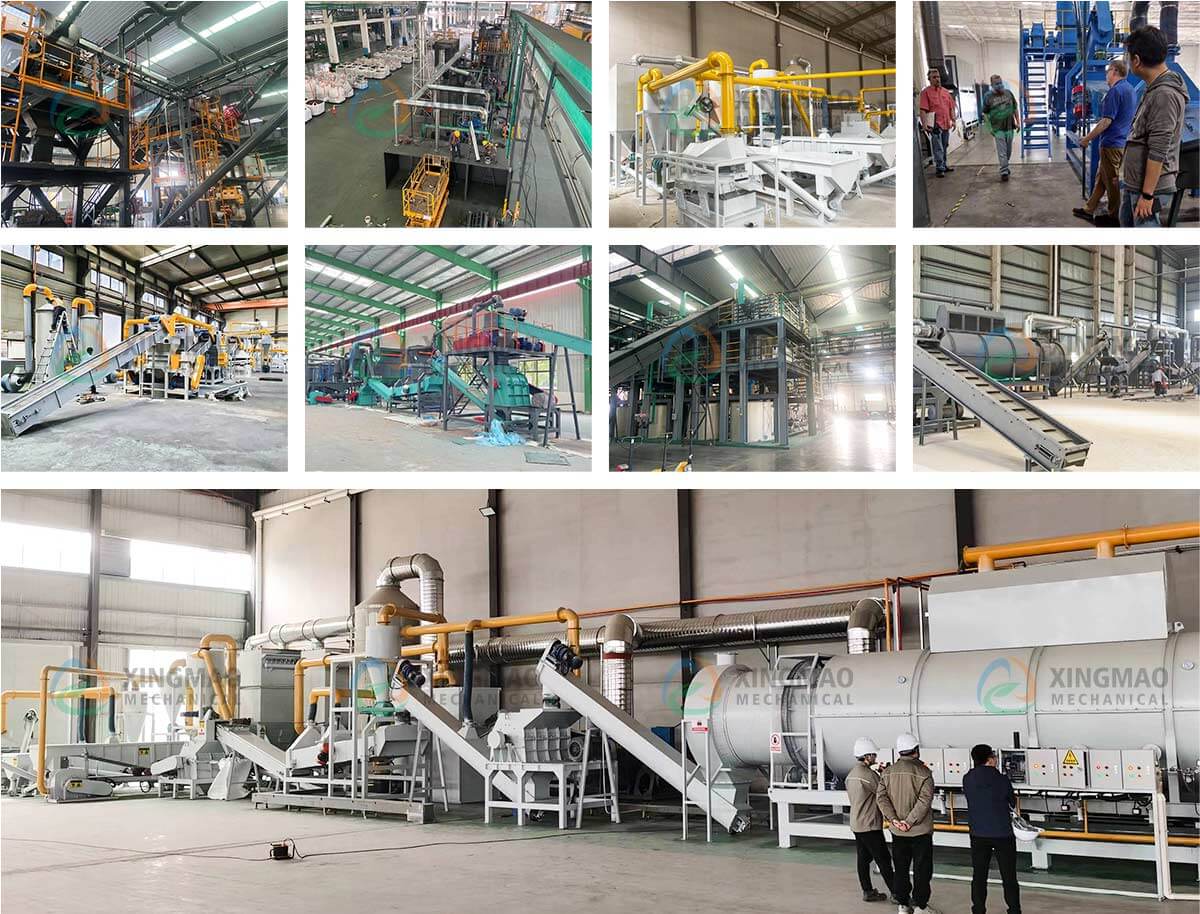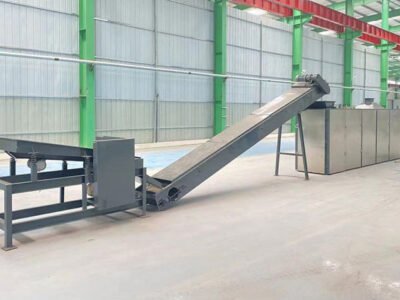
Waste Lithium Battery Recycling Machine
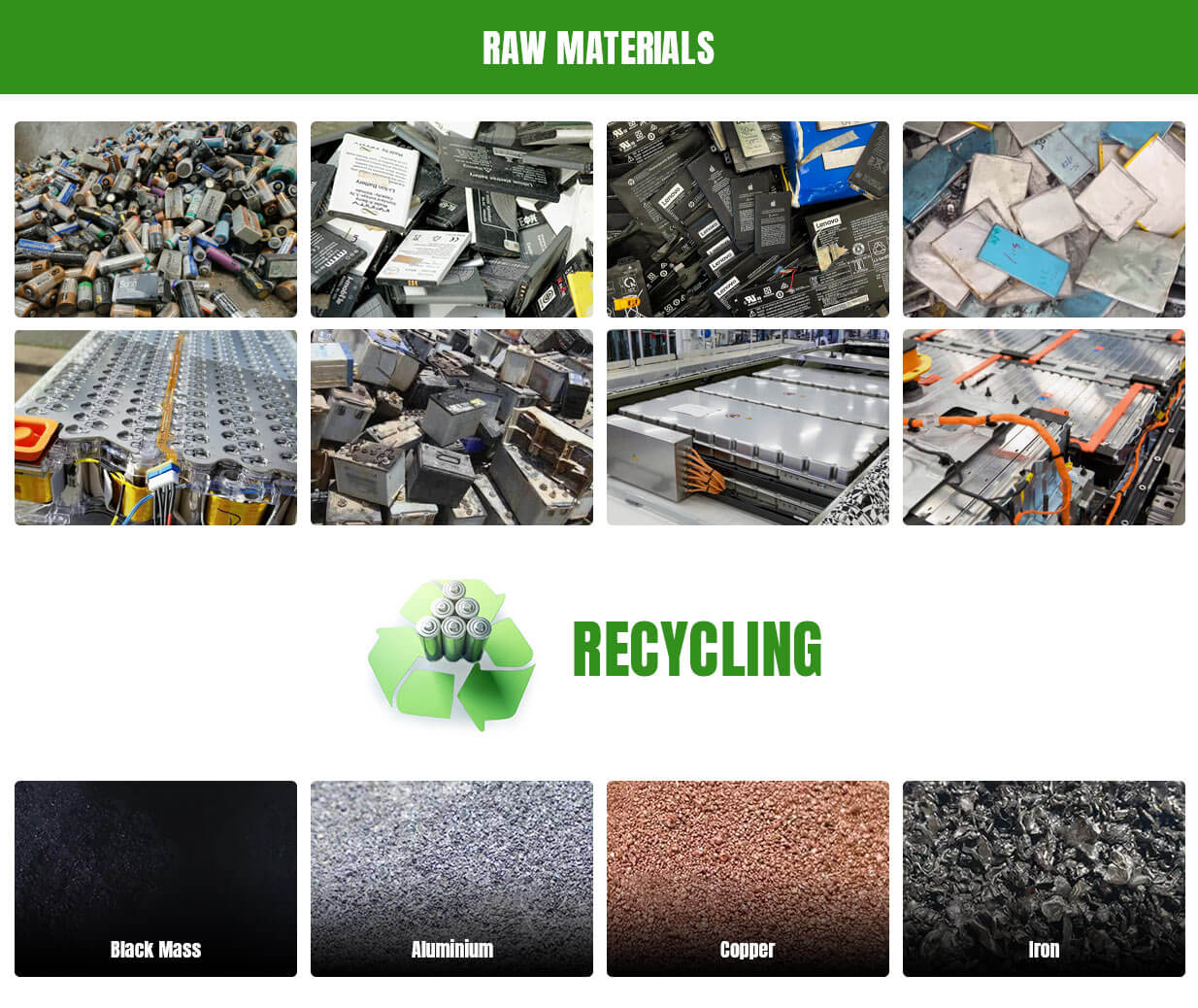
Capacity:500-2000kg/hRaw Materials: soft package battery, cellphone battery, shell battery, cylindrical battery etc
Final Products: Black Mass, Cobalt Acid Lithium, Aluminum And Copper.
Description
Application scope: lithium battery positive and negative electrode pieces, 18650 lithium batteries, cylindrical lithium batteries, ternary lithium batteries, end-of-life automotive lithium batteries, lithium iron phosphate batteries, lithium batteries and other waste lithium batteries.
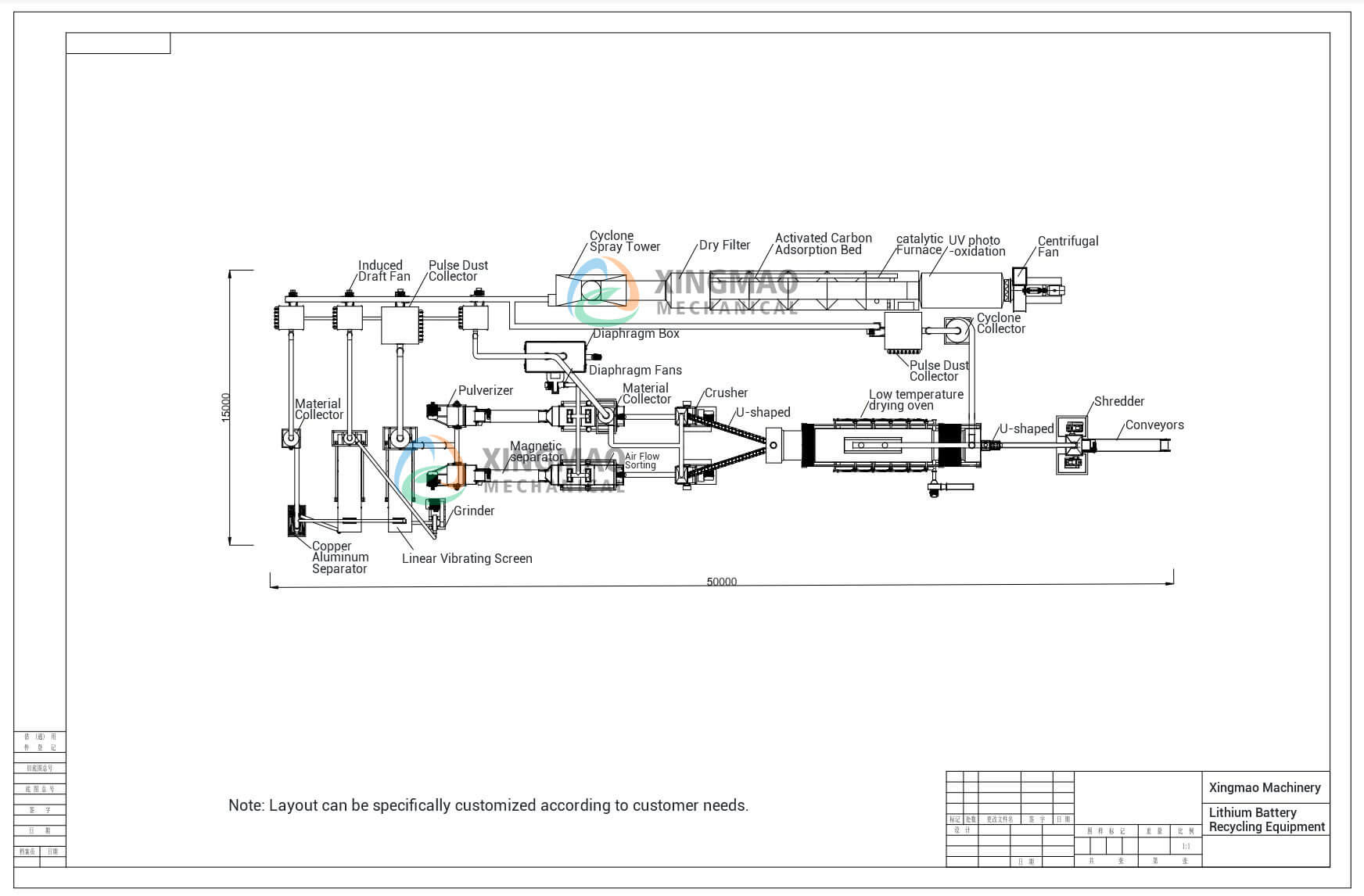
Working principle: Based on the lithium battery positive and negative electrode structure and its constituent materials, copper and carbon powder material characteristics, using hammer crushing vibration sieve sorting airflow sorting combination of waste lithium battery negative electrode constituent materials separation and recycling.
Solution
Lithium-ion battery is mainly composed of shell, positive pole, negative pole, electrolyte and diaphragm, positive pole is composed of lithium cobalt oxide powder coated on both sides of aluminium foil collector through PVDF which plays a role in bonding; the structure of negative pole is similar to that of positive pole, which is composed of carbon powder bonded on both sides of copper foil collector. Lithium-ion batteries have significant advantages such as high voltage, high specific capacity, long service life and no memory effect, etc. Since their commercialisation, they have rapidly occupied the power source market of portable electronic and electrical equipment, and their output has been increasing year by year. With a service life of about 2 years, the end-of-life lithium batteries, such as improper treatment and disposal, containing lithium hexafluorophosphate, carbonate organics, as well as cobalt, copper and other heavy metals will inevitably pose a potential threat of pollution to the environment. On the other hand, the cobalt, lithium, copper and plastic in the waste lithium batteries are valuable resources with high recycling value. Therefore, the scientific and effective treatment of waste lithium batteries not only has significant environmental benefits, but also has good economic benefits.
At present, the research of waste lithium battery resources mainly focuses on the recovery of high-value cobalt and lithium precious metals at the positive pole, and the separation and recovery of negative pole materials are rarely reported. In order to alleviate the increasingly serious resource shortage and environmental pollution caused by rapid economic development, it has become a global consensus to achieve whole-component recycling of waste materials.
Copper in the negative electrode of lithium batteries (with a content of about 35 per cent) is a widely used and important raw material for production, and the carbon powder adhering to it can be used as an additive for plastics, rubber and other additives. Therefore, the effective separation of waste lithium battery negative electrode constituent materials to achieve the waste lithium battery resourcing, eliminating its corresponding environmental impact has a driving role. Commonly used methods of lithium battery recycling include hydrometallurgy, pyrometallurgy and mechano-physical methods. Compared with the wet method and pyrometallurgical method, the mechano-physical method does not require the use of chemical reagents and consumes less energy, which is an environmentally friendly and efficient method. Based on the structural characteristics of lithium battery negative electrode, a combination of crushing and screening and airflow sorting process is used to separate and enrich it, in order to achieve efficient separation and recovery of copper, aluminium and carbon powder from waste lithium battery negative electrode.
Process Flow
Copper in the negative electrode of lithium batteries (with a content of about 35 per cent) is a widely used and important raw material for production, and the carbon powder adhering to it can be used as an additive for plastics, rubber and other additives. Therefore, the effective separation of waste lithium battery negative electrode constituent materials to achieve the waste lithium battery resourcing, eliminating its corresponding environmental impact has a driving role. Commonly used methods of lithium battery recycling include hydrometallurgy, pyrometallurgy and mechano-physical methods. Compared with the wet method and pyrometallurgical method, the mechano-physical method does not require the use of chemical reagents and consumes less energy, which is an environmentally friendly and efficient method. Based on the structural characteristics of lithium battery negative electrode, a combination of crushing and screening and airflow sorting process is used to separate and enrich it, in order to achieve efficient separation and recovery of copper, aluminium and carbon powder from waste lithium battery negative electrode.
Technical parameters
| No. | Project Details | Detection Methods | Note | ||
| 1 | Production capacity | 200kg-2000kg/H | Test drive | Delivered for normal operation | |
| 2 | Processed object | li-ion battery | Gauge Measurement | ||
| 3 | Recovery rate | Positive and negative material powder (black powder) |
99%≥ | Gauge Measurement | Includes bag recovery |
| Aluminium powder | 98%≥ | Gauge Measurement | |||
| Copper powder | 98%≥ | Gauge Measurement | |||
| 4 | Fineness | Positive and negative material powder (black powder) |
99≥% | Gauge Measurement | Includes bag recovery |
| Aluminium powder | 98%≥ | Gauge Measurement | Contains a small amount of plastic powder and other materials | ||
| Copper powder | 98%≥ | Gauge Measurement | Contains a small amount of plastic powder and aluminium powder | ||
| 5 | Diaphragms | Lithium content | 0.2%≥ | Gauge Measurement | |
| 6 | Workshop dust | Dust concentration | 320mg/m< | Gauge Measurement | |
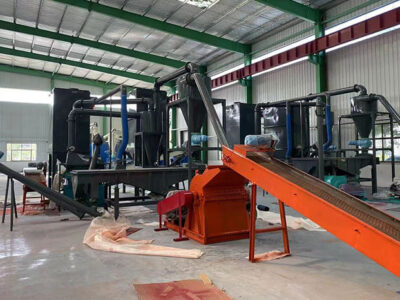
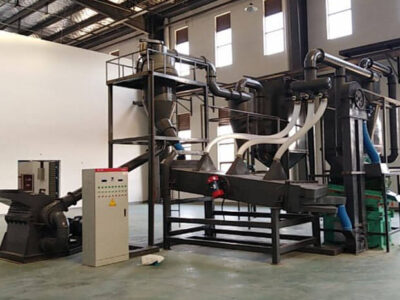
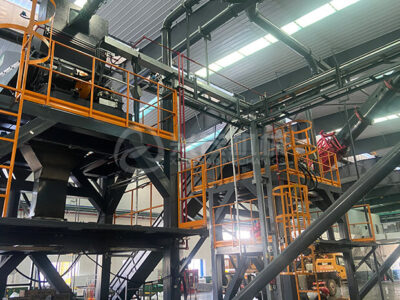
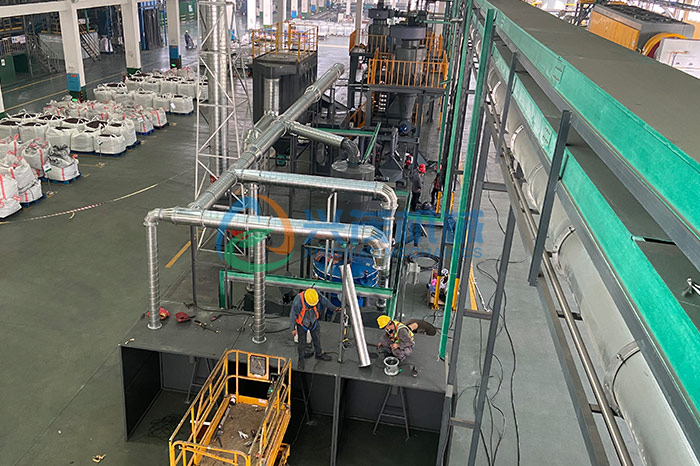
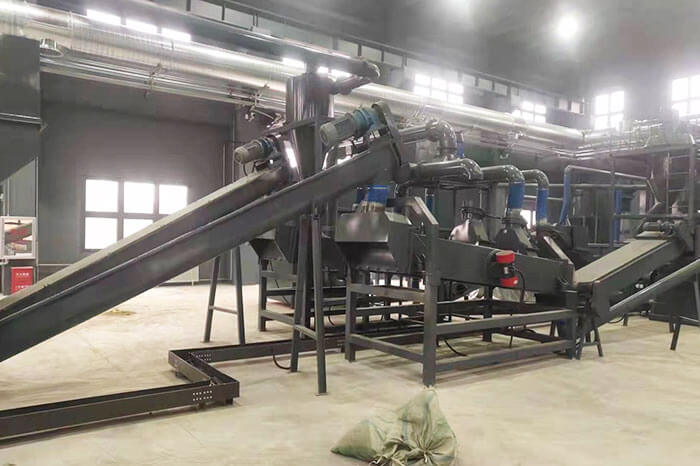
Customer Site